Before you buy land, build your home, or plant your first fruit trees, discover what it takes to create a self-sufficient property.
Learn what to look for before buying, which infrastructure to establish first, and how to build your home and food forest together.
The goal is Legacy. A property that feeds your family, supports your freedom, and becomes more productive every year.
You picture the home, the fruit trees, the garden, and the freedom of having your own place. Maybe you're still looking for land, or maybe you've already purchased it, and you're ready to get started. Then you discover how many decisions sit between buying a property and actually using it.
Can a delivery truck reach the building site? Is the water supply dependable in the dry season? Where will construction materials be stored? What happens to the road when the rains arrive?
And who is going to coordinate all this work when you're not there?
If you're developing property in another country, those questions become even more important. You're working with people who know the local conditions, but they may have a very different understanding of what you're trying to create.
Understanding how the systems fit together, preferably before you buy, can make an enormous difference in the years ahead.
What looked like one project becomes several overlapping projects, and the decisions you make in one area affect everything else.
The challenge is knowing how to bring those pieces together.
Most people don't buy land because they want to become full-time construction managers. They want a home surrounded by nature, food growing outside their door, clean water, and a place where their family can live with greater independence.
But once the work begins, there's an assumption that can become expensive: if I have the plans, hire the right people, and pay for the materials, the rest should come together?
I've learned that it doesn't always work that way.
You may have architectural drawings, but that doesn't mean the person building the house understands or will assemble every detail you intended. A tradesperson may make a perfectly reasonable decision based on what they know, without realizing how it affects another part of the property.
Maybe the water line needs to pass beneath a foundation that's already finished. Maybe the road you built needs to be reworked after the first heavy rains, and you return to find that a detail you discussed was understood differently and is now set in concrete.
While you're managing those problems, the rest of the land still needs attention.
The new fruit trees need water. The vegetation keeps growing. Your workers need instructions. The next planting season is approaching, whether the house is ready or not.
That's the Self-Sufficiency Trap: you set out to create a more independent life, but without a coordinated plan, you can end up building a property that constantly depends on your attention.
Having a contractor doesn't eliminate the need for coordination. Having money doesn't guarantee that decisions happen in the right order.
You need to understand how the property will actually operate, who is responsible for the work, and what needs to happen before the next decision can be made in another language.
YOU CAN RESCHEDULE CONSTRUCTION.
YOU CAN'T BUY BACK A MISSED GROWING SEASON.
One property. One coordinated plan.
You don't need to finish everything in your first year. You need to understand what should happen first, what can happen at the same time, and which decisions are worth delaying until you understand the property better.
That begins before you buy.
You investigate the land, its access, water, legal boundaries, and the people you'll be relying on. You think about the full development budget rather than putting everything into the purchase or the house.
Once you have the property, you begin establishing the systems that make work possible. Reliable water, secure storage, a capable local team, and clear plans for how the different parts of the property will connect.
You also pay attention to what the land is telling you. Where does the rain flow? Which areas stay wet? Where can trees grow without interfering with future buildings or access?
Then you build the year around the work that actually matters in each season.
Some construction can continue while the nursery is growing. The perimeter can begin taking shape while the house plans are being refined. Your workers can establish a maintenance routine long before the property is finished.
Your home, infrastructure, and productive landscape can develop together, each supporting the next stage of the project.
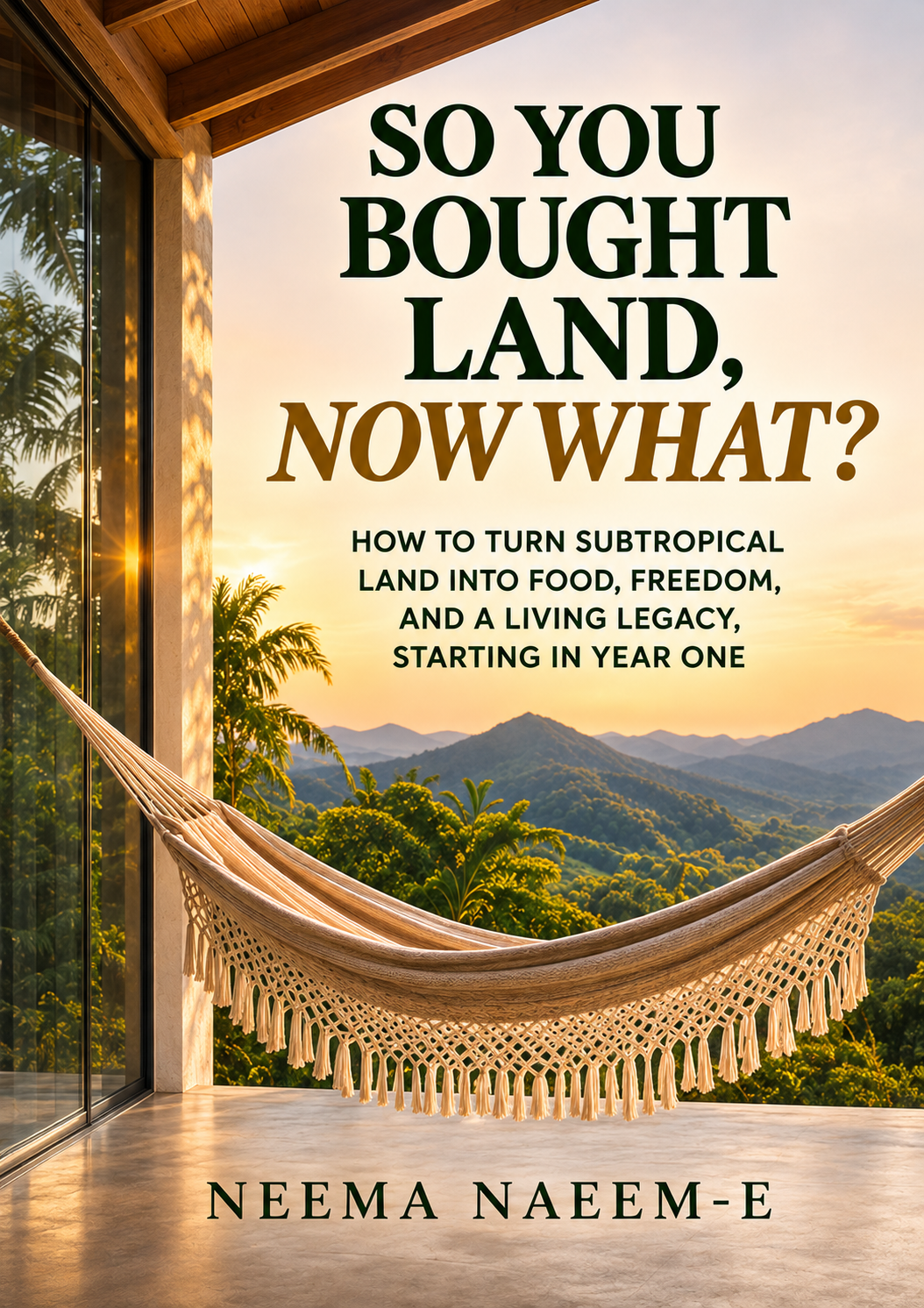
That's the approach I share in So You Bought Land, Now What?
You begin with a plan you can actually manage, and you build on it as the property becomes more established.
I've Made the Mistakes. You Can Learn From Them.
When I began establishing my first property in Mexico, I planted fruit trees all over the property without having the systems in place to protect them. What I hadn't accounted for was how quickly tropical vegetation takes over, or how difficult it would be for workers clearing the land to recognize the young fruit trees I'd planted.
I lost hundreds.
Over seven years of land development and planting food forests across four countries in Central and South America, my methods continued evolving. Working with the land, construction, sub-tropical fruit trees, and local tradespeople, I've come to appreciate how much depends on having the right people, a workable plan, and an understanding of when things need to happen.
Those experiences changed the way I approach land development.
Today, I'm continuing that work at La Madre Divina in Nicaragua, where I'm building, propagating trees, and establishing a property intended to support a personal retreat center, family, and future generations.
I wrote So You Bought Land, Now What? because I know how much effort can go into learning these lessons yourself. I needed to make those mistakes. That doesn't mean everybody else does.
If I can help you see the larger project before you make your first major commitments, or before you repeat a mistake that costs you another season, this book has done something worthwhile.
Your land should give you more freedom as it matures, not demand more of your life.
Most people naturally give the house their attention first. The building needs plans, materials, and workers. There are deadlines, payments, and decisions to make.
Meanwhile, growing a food forest takes a different kind of investment. A mango tree needs years to mature.
An established boundary needs time to create privacy and security, and your nursery needs a dependable water supply and someone who can care for the plants.
You cannot make up for those years of established roots by spending more money later.
That doesn't mean planting trees wherever there's empty space.
You need to understand where the buildings, access roads, utilities, and future activity will go. You need to know what you can water and maintain.
Then you can begin with a manageable planting area, often along the property's boundary, where the trees can grow without interfering with future construction.
Give the food forest a place in your development plan from the beginning.
Let the living landscape begin maturing while you establish the rest of the property.
A year-one framework for turning raw land into a working property.

Neema is a naturalist and multidisciplinary engineer who has spent years working with land, building infrastructure, and establishing food forests in Central and South America.
His approach comes from hands-on experience, combining construction and land development with a deep respect for the natural processes that make tropical landscapes so productive.
Today, he is establishing La Madre Divina, where he works alongside local tradespeople, propagates tropical fruit trees, and continues developing a property designed to support future generations.
He believes that establishing land requires more than a beautiful vision. It takes a willingness to understand the environment, work with the people around you, and make decisions that will still serve the property decades from now.
Through LegacyFoodForest.com, his mission is to help landowners and hospitality groups establish productive landscapes that can feed families for generations, while creating a way of life they can actually sustain.
For the Love of Legacy Food Forests
Whether you're still searching for the right property or already working to establish it, the decisions you make early on can shape the years that follow.
So You Bought Land, Now What? will help you understand what to look for, what deserves your attention first, and how to begin creating a productive property that supports the life you want.
Learn from the mistakes I've made, understand how the different parts of your project fit together, and start making decisions with a clearer plan.
Buying land is the easy part. Before You Buy, Build, or Plant, Learn What It Takes to Make Land Work. Turning it into a thriving, self-sufficient property is where the real work begins. Discover what to investigate before buying, which infrastructure to establish first, how to coordinate local builders and workers, and when to begin planting a food forest so the land can mature alongside your home. The goal is Legacy. A property that feeds your family, supports your freedom, and becomes more productive with every passing year.